Design inspiration, renovation advice, and expert perspective
The Rosewood Edit
May 8, 2026
The Growing Appeal of In-Law Suites for Leesburg Homeowners
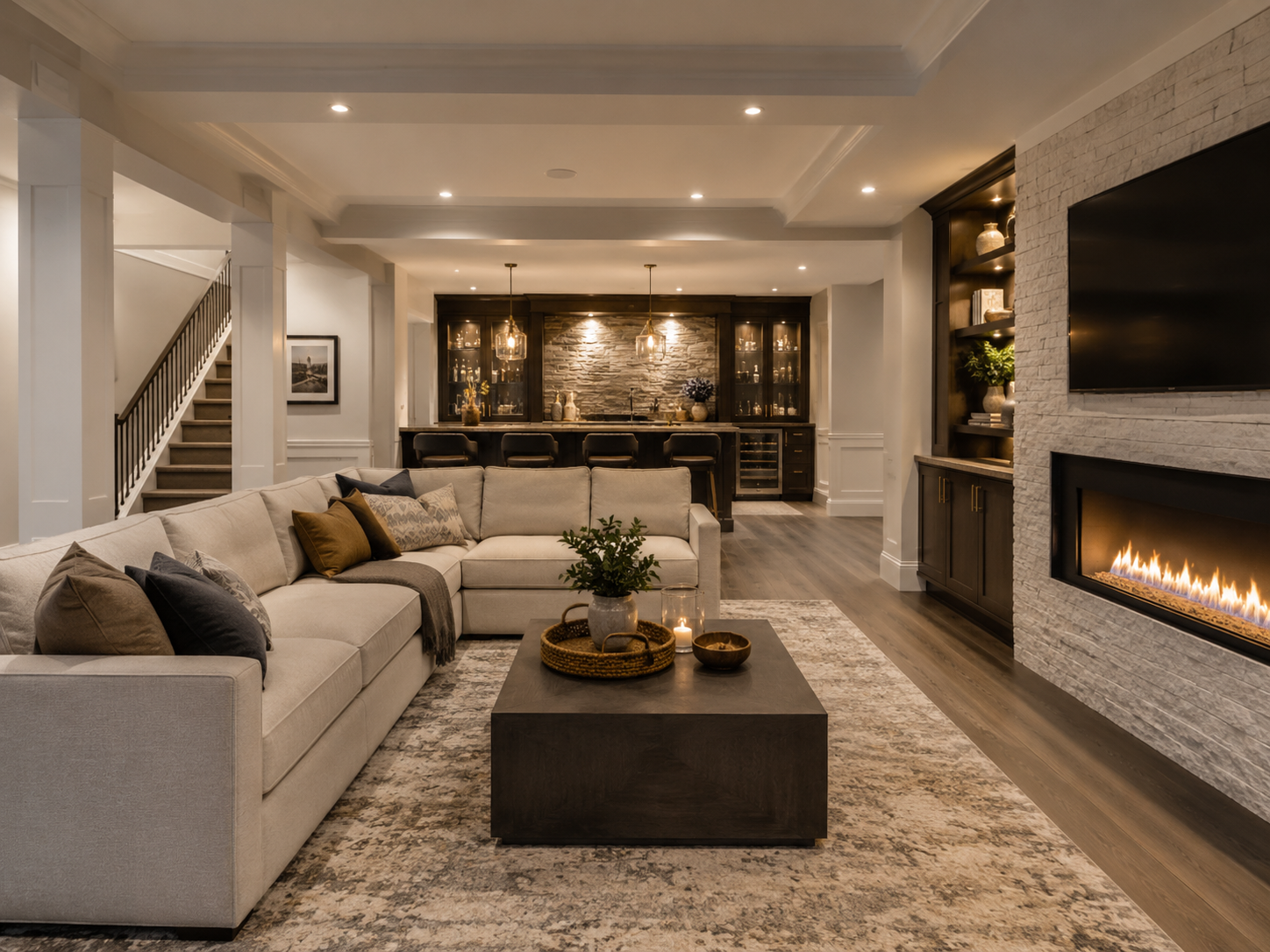
The desire for multigenerational living and increased independence for family members is a significant driver behind the popularity of in-law suites. For Leesburg homeowners, this trend offers practical solutions for evolving family needs. It can provide a dedicated space for aging parents, offering them privacy and autonomy while remaining close to family support. Simultaneously, it can serve as an independent dwelling for adult children, allowing them to gain valuable living experience without the financial strain of independent renting. Beyond family dynamics, the financial benefits are substantial. A quality basement remodel can recoup a significant portion of its cost at resale, making it a sound investment that appreciates your property value. This trend is further fueled by a growing recognition of the flexibility and added utility a well-designed in-law suite brings to a home.
What You’ll Learn: Navigating the Journey to a Legal ADU
The journey from an unfinished basement to a legal Accessory Dwelling Unit (ADU) involves several key stages, from initial research to final approval.
The journey from an unfinished basement to a legal Accessory Dwelling Unit (ADU) involves several key stages, from initial research to final approval. This guide is designed to demystify the complex process of converting your Leesburg basement into a legal ADU. We will break down the essential steps, starting with understanding what constitutes a legal dwelling unit according to Loudoun County regulations. You’ll learn about the specific zoning laws that apply to your property, the critical role of building permits and the permit process, and the design and construction requirements unique to basement conversions. We will also provide a realistic overview of the potential costs involved and what to expect during final inspections and occupancy. Our aim is to equip you, the property owner, with the knowledge needed to confidently navigate this rewarding home improvement project.
What is a Legal In-Law Suite in Leesburg? Defining Your Accessory Dwelling Unit (ADU)
Understanding the precise definition of a legal in-law suite, or Accessory Dwelling Unit (ADU), is the foundational step in your basement conversion process. These units are secondary housing accommodations located on the same property as a primary single-family home. They must be distinct living spaces, offering independent cooking, sleeping, and bathroom facilities. In Leesburg, like much of Virginia, these units are governed by specific zoning ordinances and building codes to ensure they are safe, habitable, and do not negatively impact the surrounding neighborhood. The distinction between a true ADU and a simple finished basement is crucial, as only an ADU meets the legal criteria for independent habitation and potential rental income.
Understanding Accessory Dwelling Units (ADUs) in Loudoun County
Loudoun County, which encompasses Leesburg, has specific regulations that define and permit ADUs. An ADU is essentially a secondary, independent living unit on a single-family residential property. This can take various forms, including basement apartments, attached additions, or detached cottages. The key distinction is that it’s a complete, self-contained dwelling designed for long-term occupancy. For Leesburg residents, understanding the Loudoun County ADU Regulations is the first step in ensuring your basement conversion is compliant and legal.
Key Characteristics of a Legal Basement In-Law Suite (ADU)
To be considered a legal basement in-law suite ADU in Leesburg, several characteristics are paramount. These typically include:
- Separate Entrance: The unit must have its own dedicated exterior entrance, offering privacy and autonomy.
- Independent Kitchen Facilities: This means a functional kitchen with a sink, refrigerator, and cooking appliance, enabling self-sufficiency.
- Complete Bathroom: A private bathroom with a toilet, sink, and shower or bathtub is required.
- Sleeping Area: A defined space suitable for sleeping, meeting occupancy standards.
- Adequate Egress: Basements must meet specific egress requirements for safety, particularly for bedrooms, often involving larger windows that serve as escape routes. This is a critical fire safety measure mandated by building codes.
- Size Limitations: Loudoun County zoning ordinances often impose a size limit, such as a maximum square footage or a percentage of the main home’s footprint.
- Permanent Structure: The converted basement must be a permanent structure, integrated into the existing home’s foundation and systems, not a temporary addition.
The “Why Leesburg?” Angle: Benefits for Property Owners
Leesburg offers a unique blend of community charm and proximity to amenities, making it an attractive location for homeowners considering an ADU conversion. Creating a legal basement in-law suite here offers several advantages for the property owner:
- Enhanced Property Value: A well-executed ADU can significantly increase your property’s market value, making it more attractive to future buyers.
- Accommodating Family Needs: It provides a practical solution for multigenerational living, fostering closer family bonds while maintaining independence.
- Rental Income Potential: For property owners seeking to generate income, a legal ADU can be a significant revenue stream. Around 70% of urban households consider ADUs for supplemental rental income.
- Flexibility: The space can be adapted over time, perhaps serving as a home office or a guest house before being utilized as a full in-law suite.
Leesburg-Specific Zoning Laws & Loudoun County Regulations: The Legal Foundation
Navigating the legal landscape of ADUs in Leesburg requires a thorough understanding of Loudoun County zoning ordinances and building codes. These regulations are in place to ensure that any new dwelling unit is safe, compliant, and integrates well with the existing community character. Ignoring these can lead to significant penalties, forcing you to cease work or even demolish the unpermitted structure. Adhering to local building codes and the overarching Virginia Uniform Statewide Building Code is not optional; it’s a requirement for legality and safety.
Decoding Loudoun County’s ADU Regulations for Leesburg Properties
Loudoun County regulates ADUs through its Comprehensive Plan and Zoning Ordinance. While specific details can evolve, the general intent is to allow for accessory units that are subordinate to the primary dwelling. These ADU Regulations typically address density, lot coverage, parking requirements, and design standards. For homeowners in Leesburg, it is crucial to consult the most current Loudoun County Zoning Ordinance, specifically sections pertaining to Accessory Dwelling Units, to understand all applicable rules. This ordinance dictates many aspects of your project, from lot size requirements to potential size limit constraints.
Zoning Ordinance Review: How Your Property’s Zoning Impacts Your Project
The first critical step is to identify the zoning district of your Leesburg property. Different residential zoning districts (e.g., R-1, R-2, R-3) will have varying provisions regarding ADUs. Some districts may permit them outright, while others might require special approval or even prohibit them entirely. Understanding your property’s specific zoning designation is essential before investing time and resources into plans. This information is publicly available through the Loudoun County Planning Department, and reviewing the relevant zoning ordinance is a fundamental requirement.
When a Conditional Use Permit (CUP) Might Be Necessary for Your Basement ADU
In some instances, your property’s zoning district may not automatically permit an ADU. If your desired basement conversion falls into a category that requires special consideration under the zoning ordinance, you might need to apply for a Conditional Use Permit (CUP). A CUP involves a public review process where the County Planning Commission and Board of Supervisors evaluate the proposal based on specific criteria, ensuring it aligns with community goals and does not create undue burdens. This process can add significant time and complexity to your project timeline and requires close consultation with county officials.
Understanding the Difference: Detached ADU vs. Integrated Basement ADU
It’s important to distinguish between a detached ADU (like a backyard cottage or a converted garage) and an integrated basement ADU. While both are ADUs, the construction and permitting process for a basement conversion often involves different considerations. Integrated units must adhere to the existing structure’s foundation, egress points, and utility systems. This guide focuses specifically on the process for converting an existing basement, which typically involves less exterior construction but more intricate interior work and strict adherence to building code requirements for below-grade living spaces. Understanding this distinction is key, as detached ADU regulations might differ.
The Leesburg Permitting Process: Your Step-by-Step Guide to Approval
Embarking on a basement-to-in-law-suite construction project without securing the necessary building permits is a significant risk. The permitting process might seem daunting, but it is a non-negotiable step to ensure your ADU is legal, safe, and fully compliant with all local building codes and zoning laws. It protects you, your family, and future occupants. This detailed guide will walk you through the essential permitting processes in Loudoun County.
Why Permitting is Paramount: Avoiding Costly Mistakes and Ensuring Compliance
The consequences of unpermitted work can be severe. Loudoun County officials can issue mandatory cease-and-desist orders, levy substantial fines, and even require you to remove any unpermitted additions. Furthermore, unpermitted work can prevent you from selling your property in the future, as lenders and title companies will flag the non-compliance. Insurers may also deny claims related to unpermitted structures. Obtaining building permits is not merely a bureaucratic hurdle; it’s a safeguard for your investment and ensures the safety and habitability of your ADU, aligning with all local building codes.
Preparing Your Plans: What Loudoun County Needs for Review
To initiate the permitting process, you will need to submit detailed plans for your basement conversion. These plans must be professionally drawn and typically include:
- Architectural Drawings: This encompasses floor plans showing room layouts, dimensions, door and window locations, and elevations illustrating the exterior appearance. For basements, specific attention must be paid to ceiling heights and egress windows, critical for occupant safety.
- Structural Plans: If any structural modifications are proposed (e.g., removing walls, altering load-bearing elements), detailed structural plans certified by a licensed engineer will be required.
- Mechanical, Electrical, and Plumbing (MEP) Plans: These plans detail the layout and specifications for your HVAC system, electrical wiring, outlets, lighting, and plumbing fixtures, including the design for kitchen and bathroom connections. Approved electrical plans are a mandatory part of the building permit application.
Navigating the Application: Submitting to Loudoun County Officials
Once your plans are complete, you will submit them to the Loudoun County Department of Building and Permitting. The application typically includes the submitted plans, a completed permit application form, and payment of associated fees. The review process involves multiple county officials and departments, including zoning, building codes, and potentially the Health Department for certain aspects, to verify compliance. This stage can take several weeks, and you may receive requests for revisions or clarifications. It is advisable to consult with the County permitting office early in the process to understand their specific submission requirements and expected timelines.
Building Permits and Inspections: Your Road to Compliance
After your plans are approved and your building permits are issued, the construction phase begins. Throughout the construction process, scheduled inspections by Loudoun County inspectors are mandatory. These inspections verify that the work being done aligns with the approved plans and adheres to all building codes. Common inspections include:
- Footing/Foundation Inspection: Before concrete is poured.
- Framing Inspection: After structural framing is complete but before insulation and drywall are installed.
- Rough-in Plumbing, Electrical, and Mechanical Inspections: Before walls are closed up.
- Insulation Inspection: To verify proper installation.
- Final Inspection: After all work is completed, verifying all systems are functional and all life safety requirements (like smoke detectors and egress) are met.
Passing each inspection is crucial for moving forward with the construction and ultimately obtaining your Certificate of Occupancy.
Basement-Specific Design & Construction Requirements for In-Law Suites
Converting a basement into a legal in-law suite involves more than just finishing walls. Basements have unique characteristics that demand specific design and construction considerations to ensure they are safe, comfortable, and compliant with building codes for habitable spaces. These considerations are vital for creating a functional and desirable living area, whether for family or as a rental unit generating income.
Essential Structural Work and Safety Considerations
The integrity of your basement’s structure is paramount. Before any finishing work begins, assess the foundation for any signs of water intrusion, cracks, or structural weakness. Proper waterproofing and drainage solutions are essential to prevent moisture-related issues that can compromise the living space and lead to costly repairs down the line.
- Egress Requirements: This is a critical safety concern for basement bedrooms. Building codes mandate specific window sizes and clear escape routes to the exterior in case of fire. Ensure your basement windows meet these minimum size and sill height requirements for safe egress.
- Ceiling Height: Habitable rooms in basements typically have minimum ceiling height requirements. While codes can vary, a standard is often 7 feet, though this can be less in some areas or for specific circumstances.
- Fire Safety: Ensuring adequate fire safety measures is a top priority. This includes installing smoke and carbon monoxide detectors as required by Virginia’s building codes, ensuring proper fire-rated construction where needed, and verifying egress paths.
Utility Connections: Plumbing, Electrical, and HVAC Upgrades
Bringing a basement up to code for a habitable dwelling unit requires substantial work on its utilities.
- Plumbing: Installing a bathroom and kitchen involves extensive plumbing work, including new supply lines, drain lines, and venting. Ensuring proper drainage, especially below the existing sewer line, may require sump pumps or sewage ejector pumps. The Health Department may also have specific requirements related to sanitation.
- Electrical: A basement ADU will need its own dedicated electrical circuits to power outlets, lighting, appliances, and any dedicated heating or cooling systems. The panel capacity may need to be assessed and potentially upgraded to accommodate the additional load. Professional electrical plans are a must for this phase.
- HVAC: Adequate heating, ventilation, and air conditioning (HVAC) are crucial for a comfortable living environment. You’ll need to determine if existing HVAC can be extended or if a separate system, such as a mini-split unit, is required to meet occupancy standards and ensure proper air quality.
Finishing Touches: Creating a Livable and Desirable Space
Once the structural and utility work is complete, the focus shifts to creating a functional and aesthetically pleasing living space.
- Insulation: Proper insulation is key for both thermal comfort and soundproofing. Insulating walls and ceilings will help maintain consistent temperatures and reduce noise transfer between the basement ADU and the main house, enhancing the overall living experience.
- Interior Finishes: Drywall, painting, flooring, and trim create the finished look. Choose durable and moisture-resistant materials appropriate for a basement environment.
- Natural Light and Ventilation: Maximizing natural light through properly sized egress windows can dramatically improve the feel of a basement space, making it less cave-like. Ensure adequate ventilation for maintaining good air quality, a key component of occupancy standards. Consider integrating a home office or a dedicated home entertainment center as part of the design.
Unveiling the Costs: A Realistic Leesburg Basement Conversion Budget
The cost of converting a basement into a legal in-law suite in Leesburg can vary significantly based on the scope of work, materials chosen, and contractor rates. It’s essential to approach this with a realistic budget in mind. The average cost to finish a basement in 2024 ranges from $25,000 to $50,000 for a 1,000 square foot basement. However, creating a fully functional ADU with independent kitchens and bathrooms will push costs higher, typically in the range of $80,000-$150,000 depending on finishes, egress requirements and existing conditions.
Comprehensive Cost Breakdown for Your Leesburg In-Law Suite Project
A typical budget for a basement ADU conversion in Leesburg might include the following line items:
- Permit Fees: These vary based on the estimated construction value and local County rates. Building permits are a necessary expense.
- Design and Architectural Services: Costs for plans, engineers, and designers who will prepare the electrical plans and architectural drawings.
- Demolition and Preparation: Removing existing non-load-bearing walls, flooring, and site preparation.
- Structural Work: Foundation repairs, framing, egress window installations, ensuring the unit is a permanent structure.
- Plumbing, Electrical, and HVAC: Installation of new systems, fixture hookups, and potential upgrades to existing utilities, adhering strictly to local building codes.
- Interior Finishing: Drywall, insulation, painting, flooring, trim work.
- Kitchen and Bathroom Fixtures: Cabinets, countertops, sinks, faucets, appliances, toilets, showers/tubs.
- Doors and Windows: Exterior and interior doors, egress windows.
Factors Influencing Your Total Investment
Several factors will directly impact your total investment:
- Size of the ADU: Larger spaces naturally require more materials and labor.
- Complexity of the Design: Custom layouts, unique features, or challenging structural requirements will increase costs.
- Quality of Materials: High-end finishes, custom cabinetry, and premium appliances will drive up expenses.
- Contractor Rates: Labor costs can vary significantly between different contractors and companies.
- Existing Conditions: The condition of your current basement foundation, plumbing, and electrical systems will dictate the extent of necessary upgrades to meet building code compliance.
Financial Considerations and Potential Returns
When budgeting for your ADU, consider potential financing options such as home equity loans, personal loans, or renovation-specific mortgages. The return on investment is significant. Beyond recouping a portion of the construction cost at resale, a legal ADU can provide consistent rental income, with 70% of urban households considering them for this purpose. This passive income can help offset mortgage payments or provide additional financial flexibility, making the initial investment in building permits and construction highly worthwhile.
The Final Stretch: Inspections, Occupancy, and Long-Term Considerations
Successfully completing the construction phase of your basement ADU is a major achievement, but the process isn’t fully concluded until final approvals are secured. This final stage ensures your new living space is legally recognized and ready for occupancy. Adhering to all requirements set forth by the Building Inspections Department is critical for this final step.
Passing Final Inspections: What the Building Inspections Department Looks For
The final inspection is a comprehensive review by Loudoun County inspectors to ensure all work has been completed according to the approved plans and building codes. They will check:
- Life Safety Systems: Functionality of smoke and carbon monoxide detectors, proper installation of egress windows, and fire-stopping measures as per Virginia’s building codes.
- Plumbing and Electrical: Verification that all fixtures are connected and functioning correctly, and that wiring and breaker panels meet code requirements outlined in the electrical plans.
- Structural Integrity: Confirmation that all structural elements were built as per the approved plans, ensuring the unit is a permanent structure.
- Finishes: Ensuring that habitable space requirements, such as minimum ceiling heights and adequate ventilation, are met.
- Accessibility: Checking for any basic accessibility requirements if stipulated by codes.
Certificate of Occupancy: Your Green Light for Legality
Upon passing the final inspection, Loudoun County will issue a Certificate of Occupancy (CO) for the ADU. This document is official approval that the dwelling unit meets all legal requirements and is safe for habitation. The CO is crucial for insurance purposes, future sales, and any rental agreements. Without it, your basement conversion remains unpermitted and non-compliant, potentially facing penalties from county officials.
Registering Your ADU (If Applicable for Rental Purposes) and Notification Processes
If you intend to rent out your basement ADU, there may be additional registration or notification processes required by Loudoun County. These might include obtaining a business license, adhering to landlord-tenant laws, and undergoing periodic Health Department inspections. Understanding these requirements upfront will ensure you remain in compliance and can operate your ADU legally as a rental unit, maximizing your rental income potential. It’s advisable to contact the relevant County departments to confirm any specific registration needs for rental properties.
Choosing Rosewood for Your Next Basement Renovation
Transforming your Leesburg basement into a legal in-law suite or ADU is one of the most meaningful investments you can make in your home — and your family’s future. The path forward requires careful attention to Loudoun County zoning requirements, building codes, permitting, and final inspections. But when each step is handled with precision and care, the result is a living space that is safe, code-compliant, and built to endure.
At Rosewood Building & Design, we guide Northern Virginia homeowners through every phase of this process — from initial design and permit applications to construction and final occupancy sign-off. Our team brings deep local expertise, transparent communication, and an unwavering commitment to quality craftsmanship to every project we take on.
You don’t have to navigate the complexity alone. Whether you’re planning a multigenerational suite for aging parents or a private space that adds lasting value to your home, Rosewood is ready to bring your vision to life.
Schedule your private consultation today and take the first step toward a basement remodel that works as hard as your family does.